

If you have been a regular reader of this blog you will know some two things.
Administrative burdens are an effective way to limit people’s ability to access public services.
President Trump’s One Big Beautiful Bill Act weaponized these burdens to cut SNAP (income supports for food) and Medicaid to offset a tax cut that will largely go to wealthy Americans.
In other words, your government is making the most vulnerable Americans jump over more and more bureaucratic hurdles, rooting for them to fall, so that it can take the money it would have spent helping them and give it to the richest Americans. It is a deeply dystopian vision of governing, where the failures of the weak profit the strong.
This was apparent even as the One Big Beautiful Bill Act was being debated last year. The OBBBA mostly does not change the eligibility for our major safety net programs, but it does make them a lot smaller via administrative burdens. When the bill was being considered, we pointed to the almost one-for-one tradeoff between tax cuts and benefits cuts.
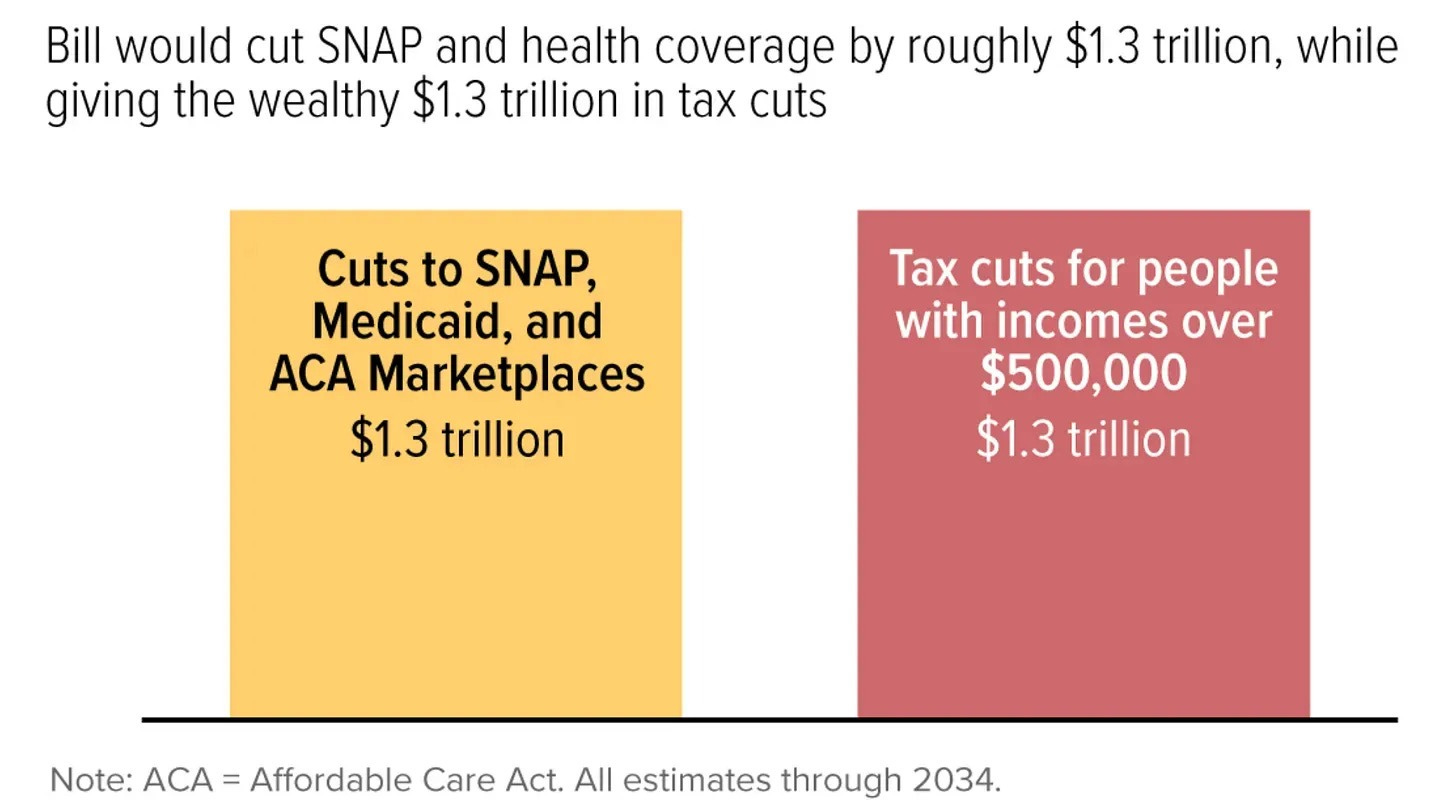
And back in October of 2025 we noted that the OBBBA, by design, would lead to millions of eligible beneficiaries losing coverage. States, facing huge financial penalties if they didn’t reduce their error rates, would add layers of new paperwork requirements that beneficiaries wouldn’t be able to navigate.
A challenge of writing before these events happen is that we deal in abstractions: numbers and graphs tell us about the size and nature of the impact. It’s one thing to predict that millions will lose critical benefits. It is an entirely different thing to watch it actually happen, and to read the stories of the people facing the consequences of political choices.
Now, the bill of the One Big Beautiful Bill Act is starting to come due. Since last July, when the OBBBA was signed, more than 4 million people, including 1.5 million children, have lost coverage. Coverage is plummeting across the country. The Center on Budget and Policy Priorities is keeping a detailed tracker of these trends.
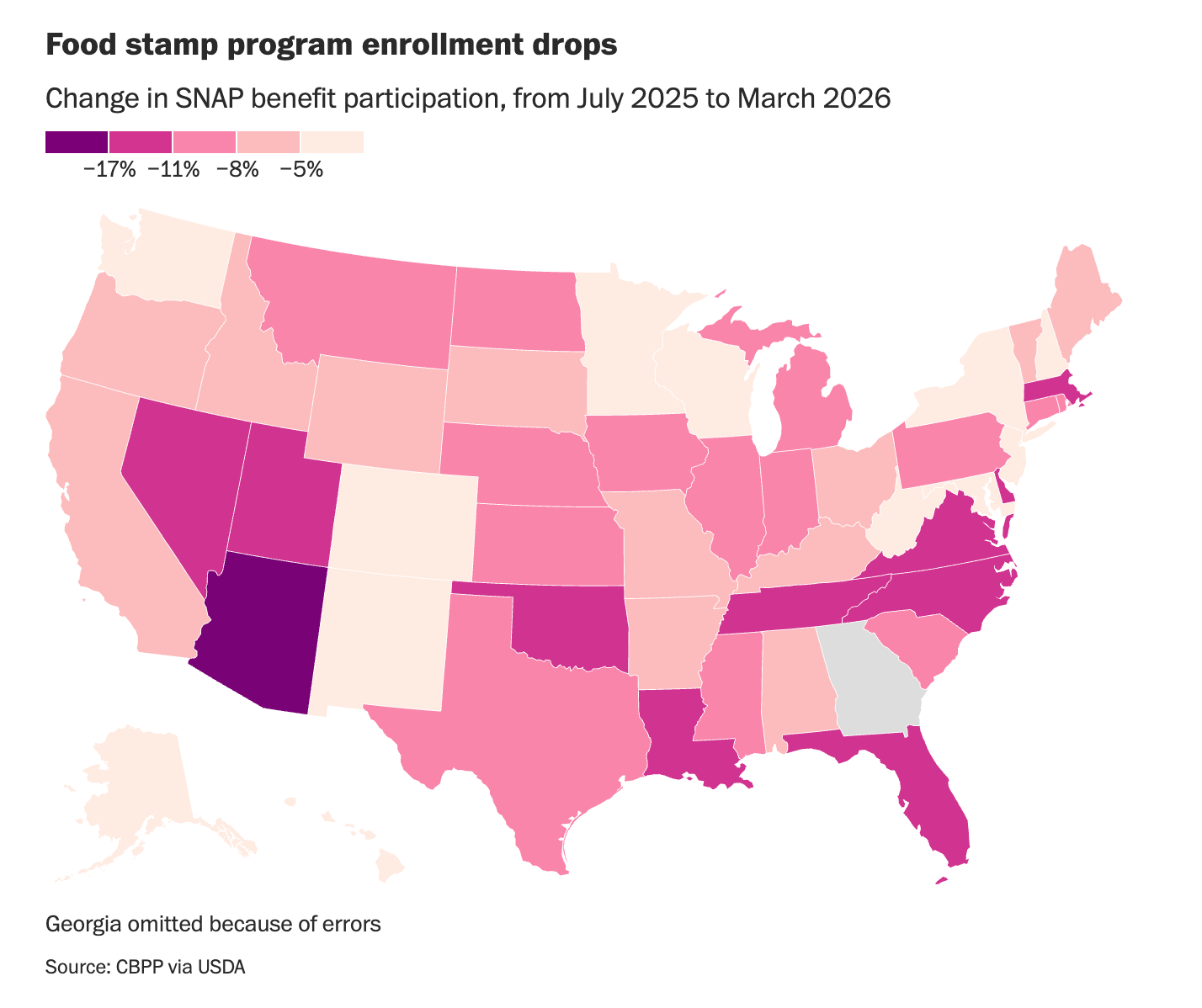
Arizona is the canary in the coal mine, pushing more quickly to reduce its SNAP error rates, and offering a preview of what is likely to happen elsewhere. More than 440,000 people lost coverage. In an excellent piece in the New York Times, Jason DeParle and Adriana Zehbrauskas tell their stories in a way that is more compelling than any graph we could give you, and so we are sharing in detail.
Too many requirements
Arizona responded to the threat by unilaterally increasing documentation requirements, going so far in one case as to push a homeless man to document his panhandling income.
But the increase in compliance costs affected nearly all parts of the application process. For example, instead of just noting your household size, the state started requiring many “to get signed letters from neighbors or friends” to verify it. Many caseworkers also started refusing to take earnings data from employers over the phone–a quicker process than filing additional paperwork documentation.
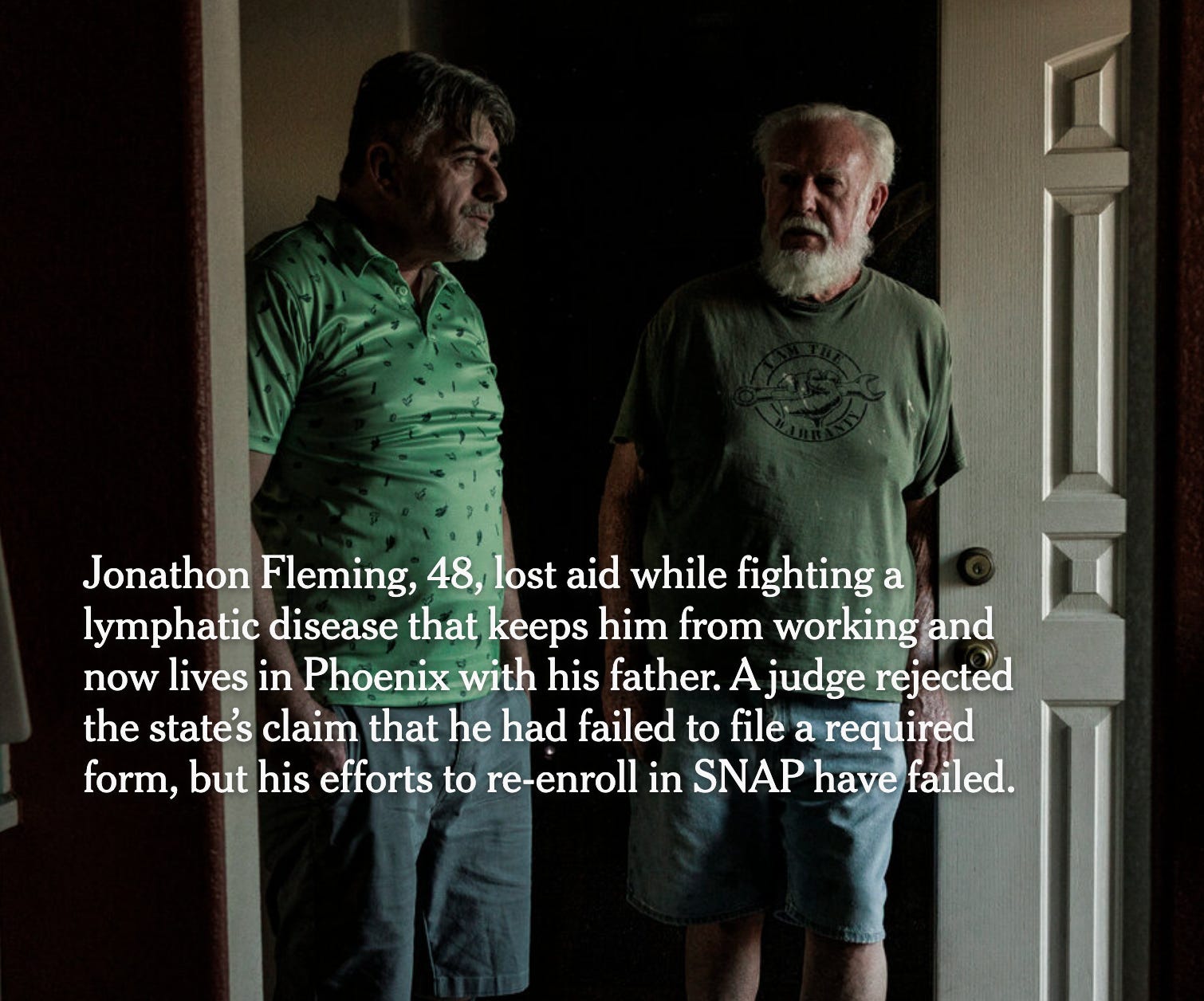
One school of thought suggests that people who least need benefits will simply opt out when the hassles become too high. But there is more evidence that the most vulnerable will be the most hurt by burdens. For example, people with poorer health struggle more with administrative demands. As Jonathan Fleming said: “I need to focus on my health, not to be dealing with this.
Too little staff
Additional bureaucratic requirements don’t just hit beneficiaries, it adds significant amounts of work for the caseworkers processing these applications. And at the same time the state increased documentation requirements, they laid off a third of their caseworkers.
The impact for beneficiaries was swift.
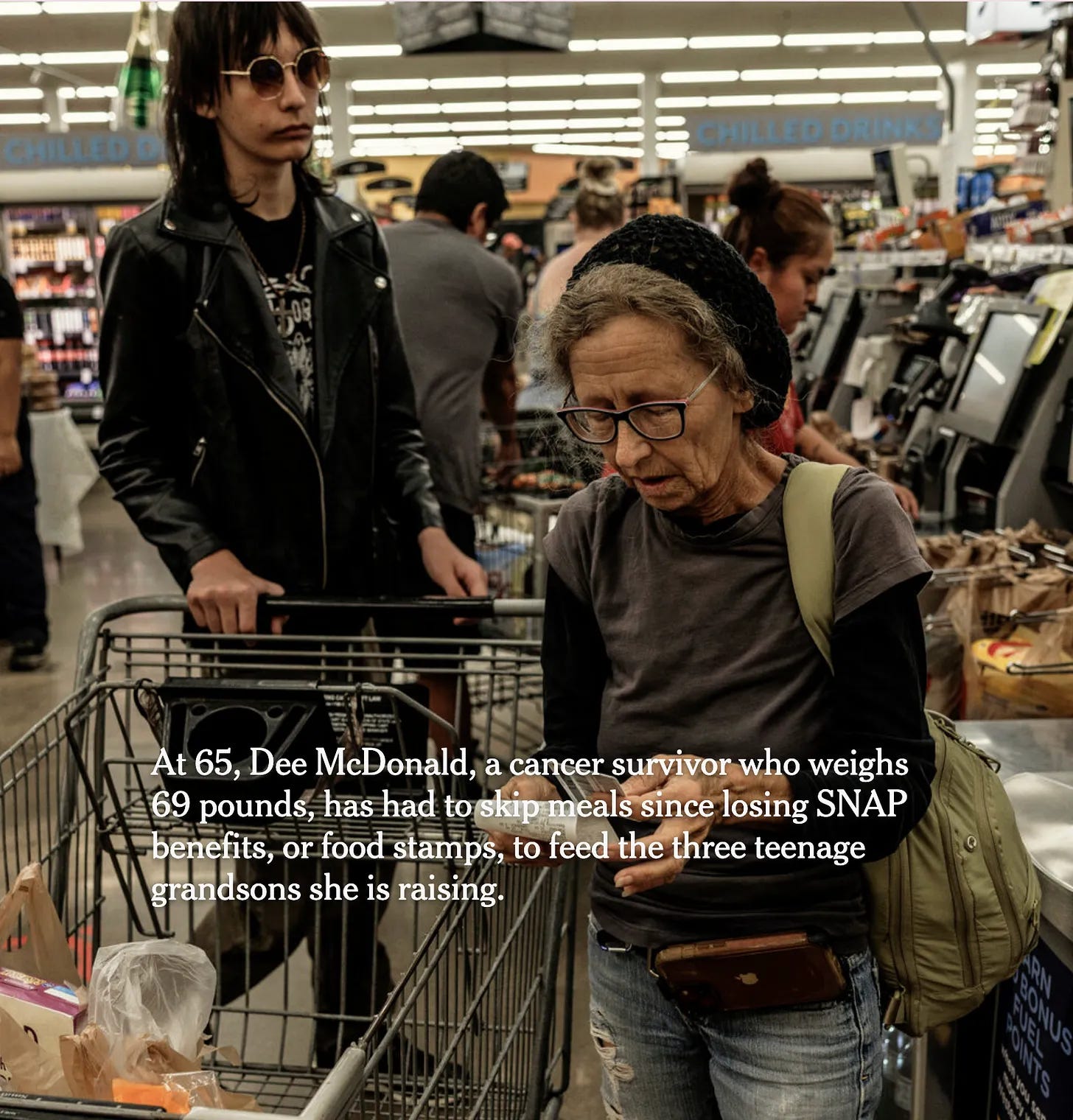
Last October, Ms. McDonald, 65, tried to renew a $700 monthly SNAP benefit that supplements Social Security and provides a third of her income. In November, no aid arrived. In December, a caseworker said to “hang in there” because renewals were months behind. In January, Ms. McDonald made 100 calls without reaching anyone, she said. In February, she discovered her case had been closed. She had submitted the wrong income statement, she later learned, and the state’s delays left her no time to fix it.
McDonald is a cancer survivor who weighs less than 70 pounds and is skipping meals and hustling to food banks to make sure the grandkids she takes care of are protected. She “describes her worries as a mental tax, paid nightly on her pillow.” Psychological costs are a key part of administrative burdens, invisible but ever present. She told reporters: “I go to sleep thinking about what are we going to have. I’m exhausted.”
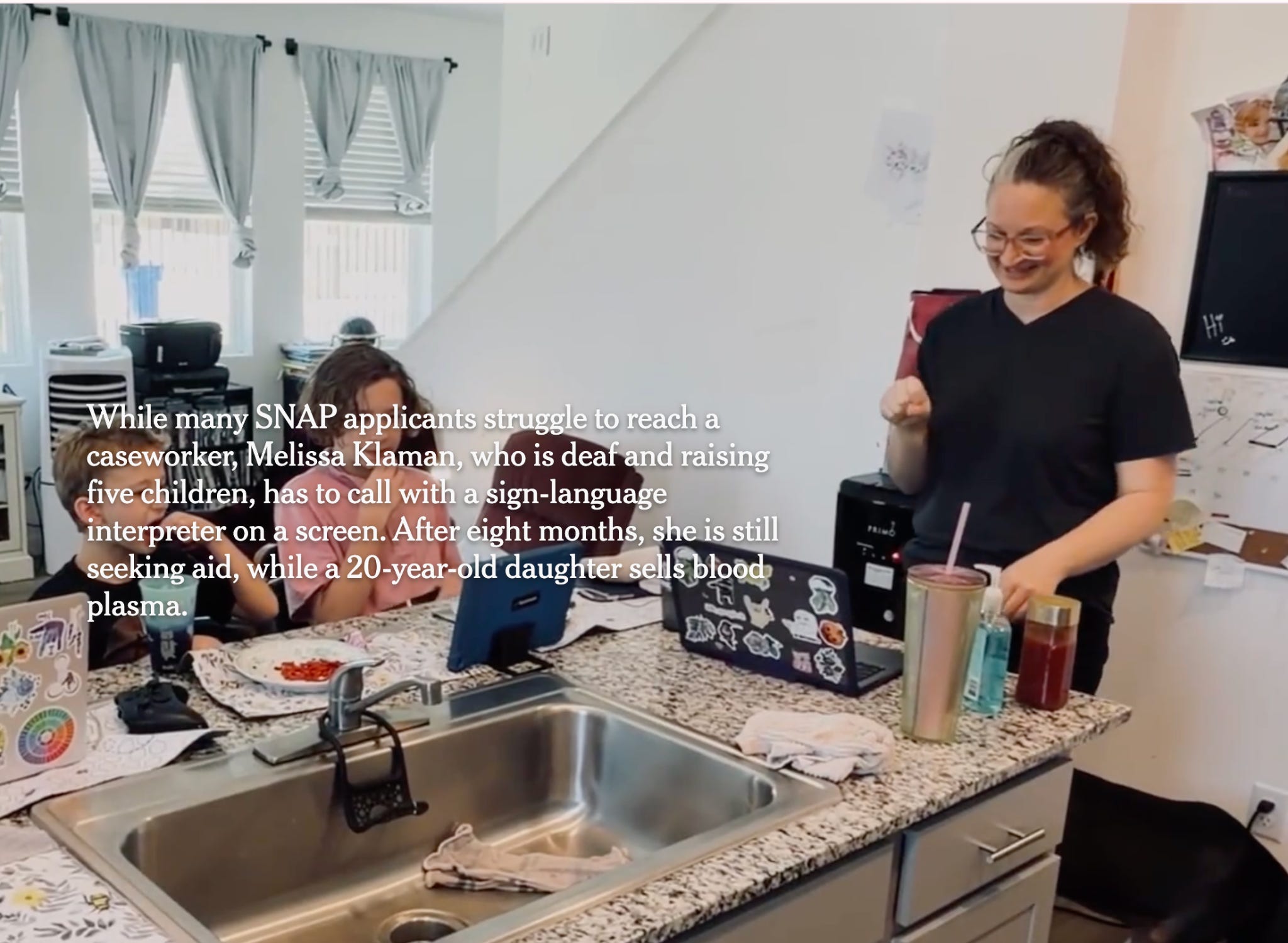
Ms. Klaman, the mom of five who is deaf, struggles watching her daughter sell blood: “Inside I’m an emotional wreck. I’m her mother — I should be the provider — and we’re using her blood.”
A year ago, how many of us had heard of the term error rate? Mostly, the error rates represent mistakes rather than fraud, sometimes they come from beneficiaries and sometimes from caseworkers. When a reporter explained to Dee McDonald about how the Trump administration was penalizing states with high error rates, she “wore a look of sudden understanding. “It’s the pressure from the administration not to make a mistake,” she said.”
It would be easy to blame Arizona, but they are responding as the Trump administration hoped they would, with few good options. The head of the agency that administers SNAP was admirably honest, noting that they faced a $300 million cut otherwise:
It’s frankly sickening to me the number of individuals that continue to struggle with the added bureaucracy…It’s an existential threat. States are absolutely contemplating a world in which SNAP isn’t available.
One of the arguments the Trump administration has made is that these programs have become too generous, and are beset with fraud.
What is defined as too generous is subjective, and the best way to have that debate would be to straightforwardly change eligibility levels to limit benefits to fewer and lower income people. But that is not what happened. The surreptitious use of administrative burdens replaced that policy debate, because it was a debate the Trump administration knew it would not win. And despite the claims about fraud, the vast majority of those being hurt right now are eligible.
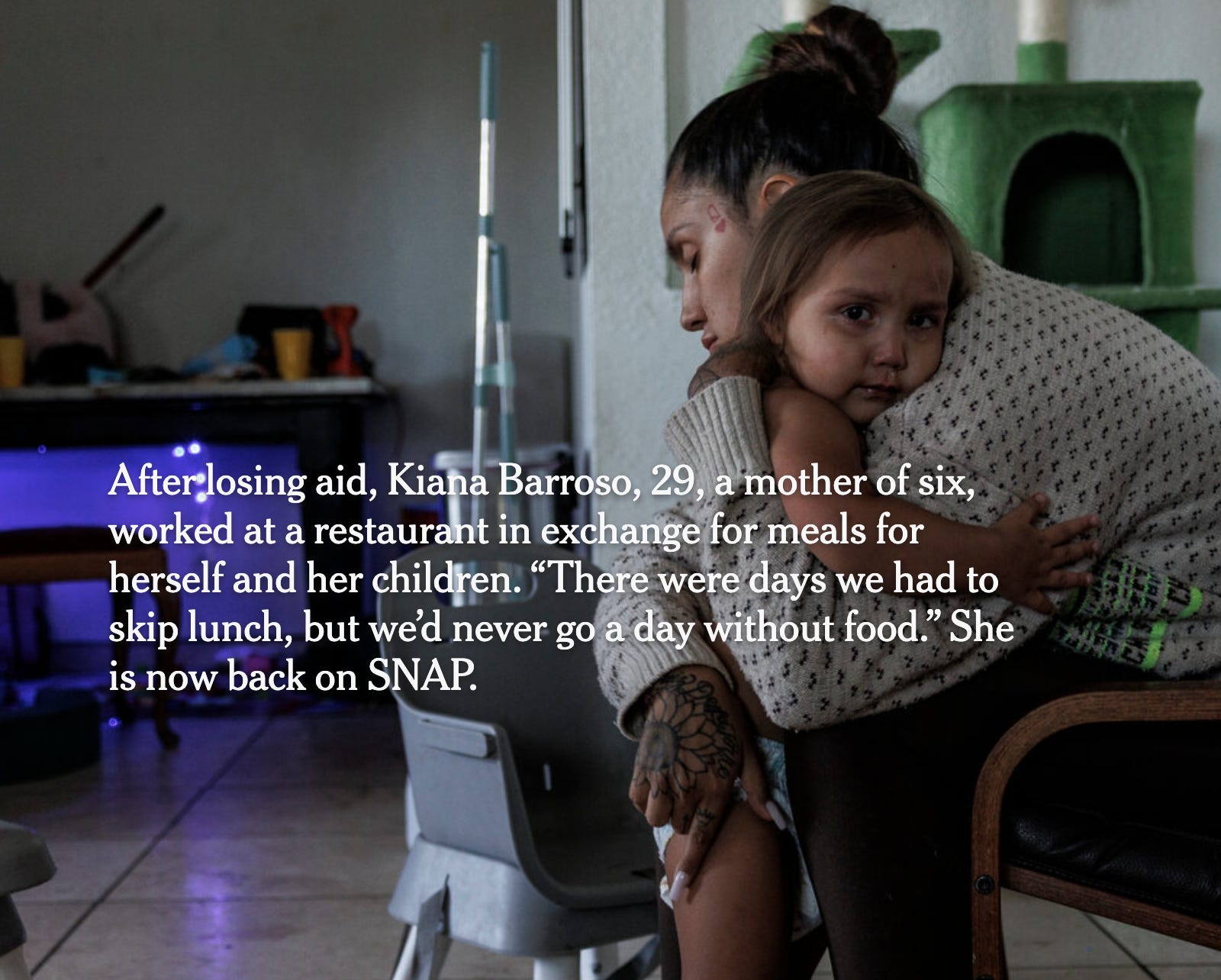
So far, we have focused on SNAP. It will get worse. But it’s only the start. The second part of the One Big Beautiful Bill Act comes later. Deliberately timed for after the 2026 midterms, Medicaid work requirements will kick in on January 2027. It will hurt people on Medicaid the same way that people on SNAP are being hurt now.
Gabriel Scheffler recently broke down how this will work. Again, we can tell you what will happen before it happens. In a few months we will be reading similar stories of human misery. It is predictable, because it is by design.
One Year On from the One Big Beautiful Bill:

Fidelity to the truth has not been a hallmark of the second Trump Administration. Still, the Administration’s claim that the One Big Beautiful Bill Act (OBBBA) does not represent a “cut” to the Medicaid program stands out.
Under criminal law, you're innocent until proved guilty. Under safety net law, you're guilty until you prove you're innocent. And, the people who voted for this claim to be Christians. We're going to have to support local food banks, and stop voting for Republicans.
All true. Side note: I’m a health care provider, and I just retired a year earlier than I planned, from a job I enjoyed. I was essentially forced into retirement due to budget cuts in the program I was working for, which I suspect were at least partially related to management anticipating the upcoming cuts to Medicaid (which covers a lot of the patients I was serving). Again, in this very malignant government’s eyes, this is positive, because they don’t think my patients, who they consider freeloaders, deserved my services. Never mind that my patients were all children!