

When Trump came into office, the IRS was in its best shape in a generation, having received an influx of funding and new staff under the Biden administration. Within months, as we wrote last year, much of that progress was halted or reversed. To track the damage, we launched the IRS Spotlight, which documents changes and assesses performance data at the agency.
Though Frank Bisignano, the IRS’s Chief Executive Officer, has claimed that 2026 marked “the most successful filing season in IRS history,” the evidence is clear: the IRS’s capacity to provide service to taxpayers and enforce the tax code has declined; taxpayer privacy protections have eroded; and the neutral, nonpartisan system of tax administration is being politicized.
The Administration is trying to sweep the consequences of the DOGE era under the rug. In testimony to Congress and in interviews, Bisignano has insisted that the agency, which lost a quarter of its workforce in 2025, was adequately staffed.
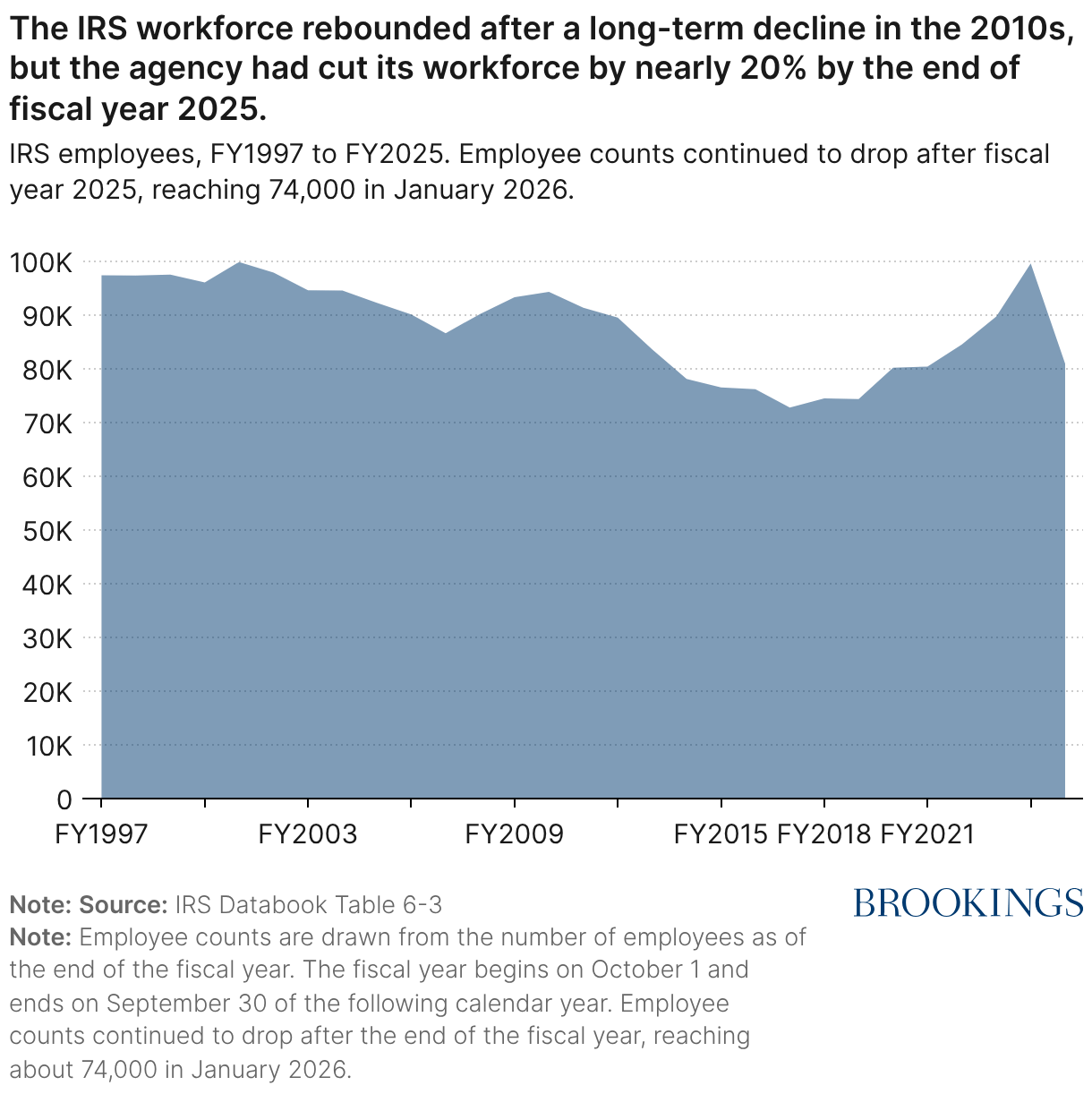
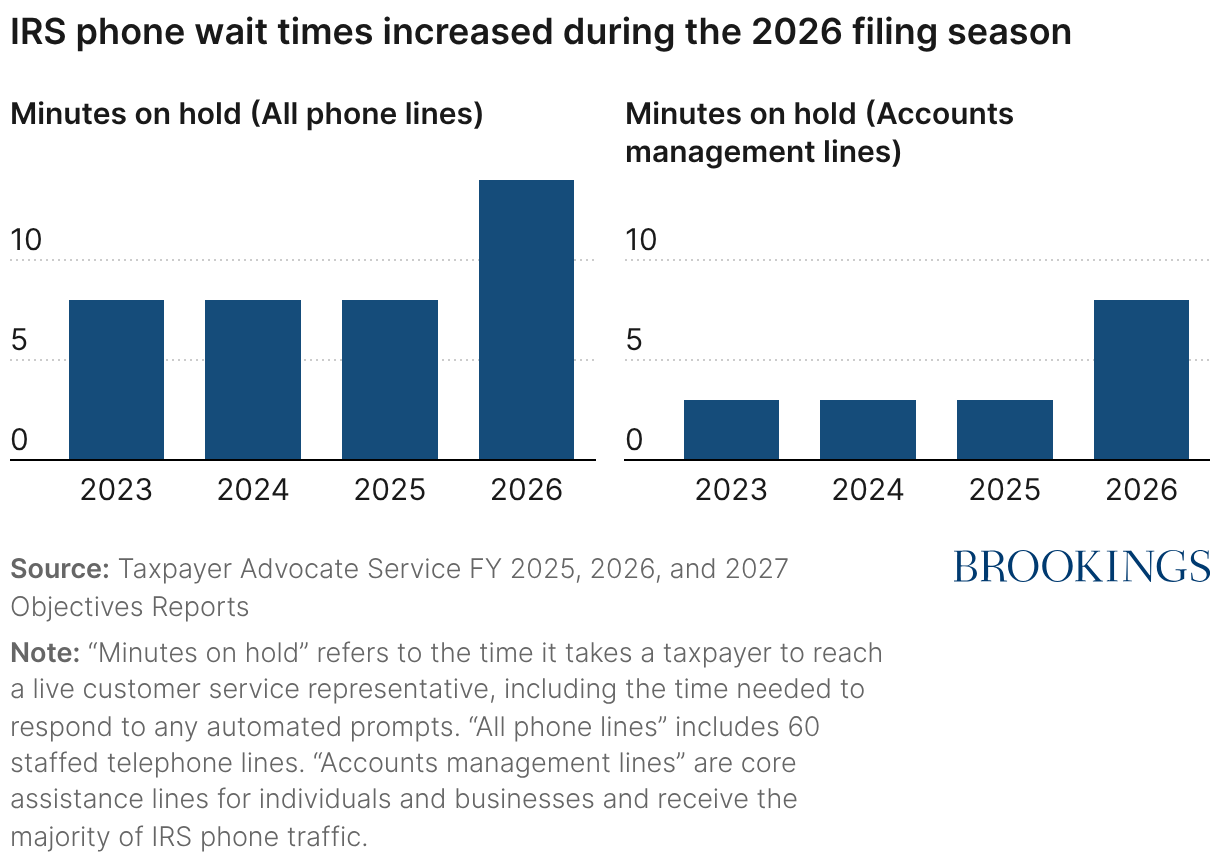
Internally, however, agency leaders were sounding the alarm. Mid-filing season, the agency requested authorization to rapidly hire 8,000 additional employees, and around 1,200 human resources and information technology employees were involuntarily transferred to taxpayer service and processing roles. Despite these unprecedented efforts to compensate for staff losses, wait times on phone lines across the IRS nearly doubled.
This tax season was especially rough for taxfilers still using paper. Paper individual income tax returns were processed in 16 days last year; this year, it took 30 days on average. The agency issued paper check refunds in about six weeks, compared to about a week in previous filing season, a serious financial hardship for taxpayers who lack access to electronic payments, including unbanked, low-income, and elderly taxpayers.
Along with providing taxpayer services, the IRS is also responsible for ensuring taxpayer compliance. But the IRS lost a third of its revenue agents and tax examiners in 2025, and we are beginning to see the effect of declining audits on revenue.
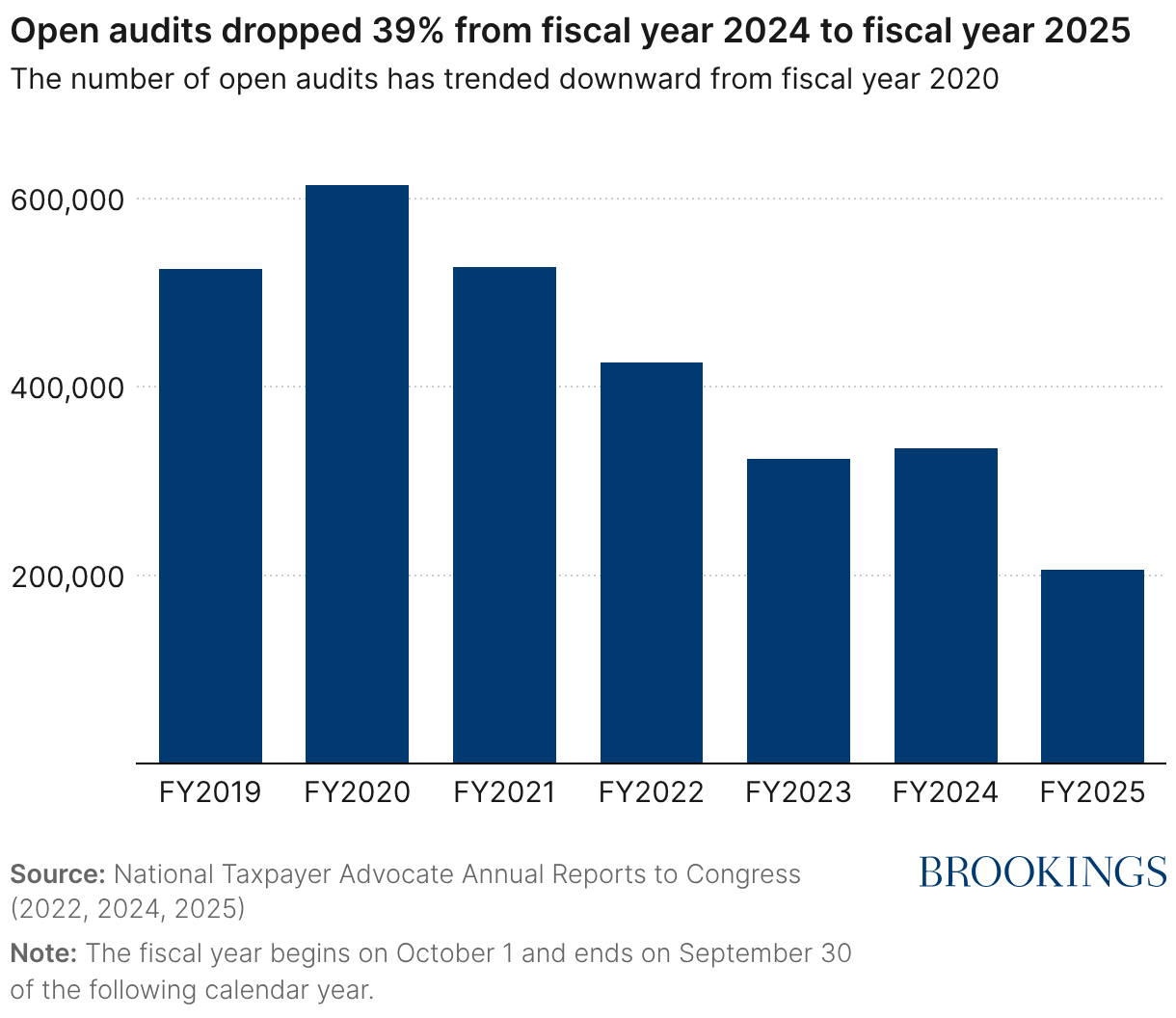
IRS enforcement revenue in fiscal year 2025 was down nearly $5 billion compared to the previous year. At the same time, the IRS has delayed producing an updated “tax gap” estimate, the IRS’s calculation of how much tax money goes unpaid. Without that figure, it will be harder to measure the effectiveness of IRS enforcement. The Yale Budget Lab projects that staffing cuts will reduce IRS revenues by $600 billion over ten years.
Both service and compliance were on an upward trajectory in 2024, thanks to new investments intended to modernize the agency. But in 2025, many of those efforts were “indefinitely paused or canceled.” The best-known of those programs was the agency’s free public tax preparation software, Direct File. But another important program that has been disrupted was a $61 million in-house paper scanning and processing system.
What the death of Direct File tells us about state capacity

“Taxes are what we pay for a civilized society” according to Chief Justice Oliver Wendell Holmes Jr.. But the billions of hours and hundreds of billions of dollars Americans spend on tax reporting are the price we pay for a dysfunctional government unwilling to invest in public interest capacity.
The National Taxpayer Advocate has described paper as “the IRS’s Kryptonite”—you might remember seeing pictures of stacks of paper returns filling IRS facilities during the pandemic. In July 2023, the IRS decided to develop a scanning system using Inflation Reduction Act funds. By spring 2025, the agency was preparing to launch testing of a new in-house scanning system that would, it was hoped, finally address the paper backlog.
Choosing to rebuild state capacity - IRS edition

The Internal Revenue Service is the least popular federal agency according to surveys, viewed favorably by just 42% of Americans. That is not altogether surprising. Given its task, it will never be as popular as, say, the National Parks Service (84% approval rate). But it is still more popular than the “federal government” as a whole (40%) and other pol…
But in April 2025, work was suspended, as agency leadership decided to switch to using contractors. After initially prioritizing 26 tax forms for scanning, “concerns about the contractors’ readiness” led the agency to scale back the program to only three major tax forms. Early data from Treasury Inspector General shows that even this downsized goal is not near to being met; from May through December 2025, only 18% of the paper forms were successfully scanned.
Most serious of all is the ongoing damage to taxpayer privacy protections and nonpartisan tax administration. Section 6103 of the U.S. Code strictly limits the sharing of tax data, even between federal agencies. But the Trump administration has been seeking to extract tax data from the IRS to power its mass deportation campaign. Under an April 2025 memorandum of understanding between IRS and ICE, the Department of Homeland Security has made repeated demands for as many as 7.3 million tax records, which would provide the agency with address information it intended to use to locate and deport taxpayers.
The IRS’s chief privacy officer was among the senior leaders who left the agency over the violation of longstanding IRS privacy protections. Indeed, nearly everyone who served in the IRS’s senior civil service leadership in January 2025 has left the agency.
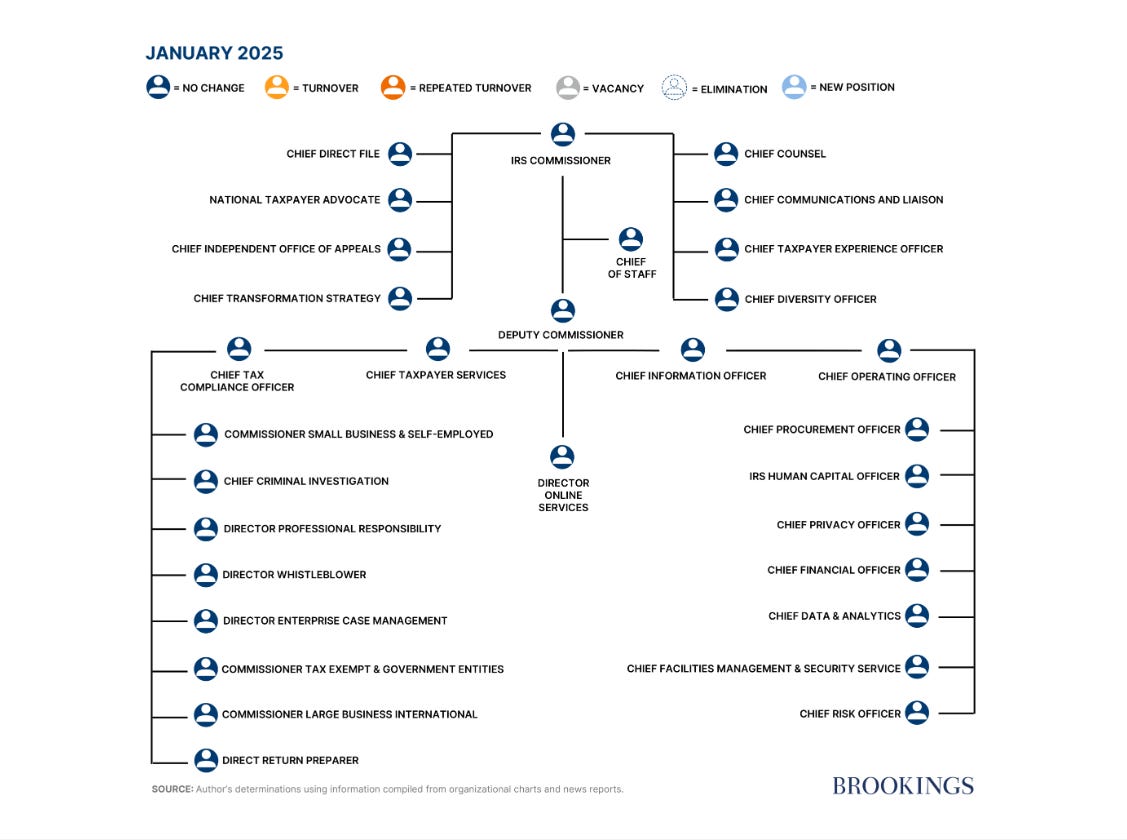
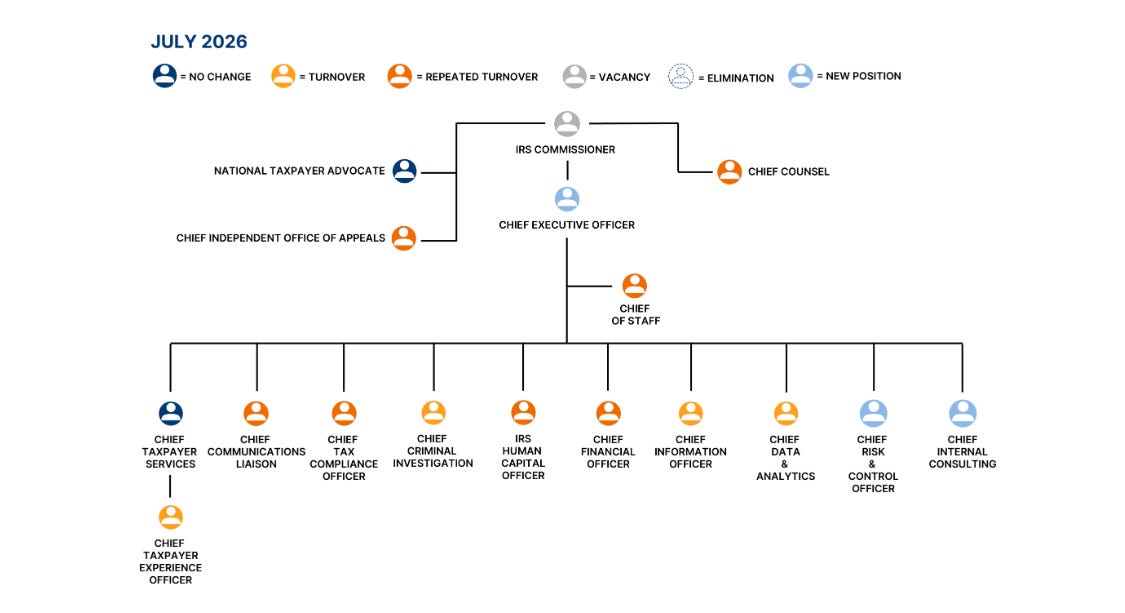
And, after churning through a record seven commissioners in 2025, the IRS no longer has any commissioner at all. It has been 221 days since the position was occupied either by a Senate-confirmed or acting commissioner, a situation unprecedented since the agency’s founding during the Civil War.
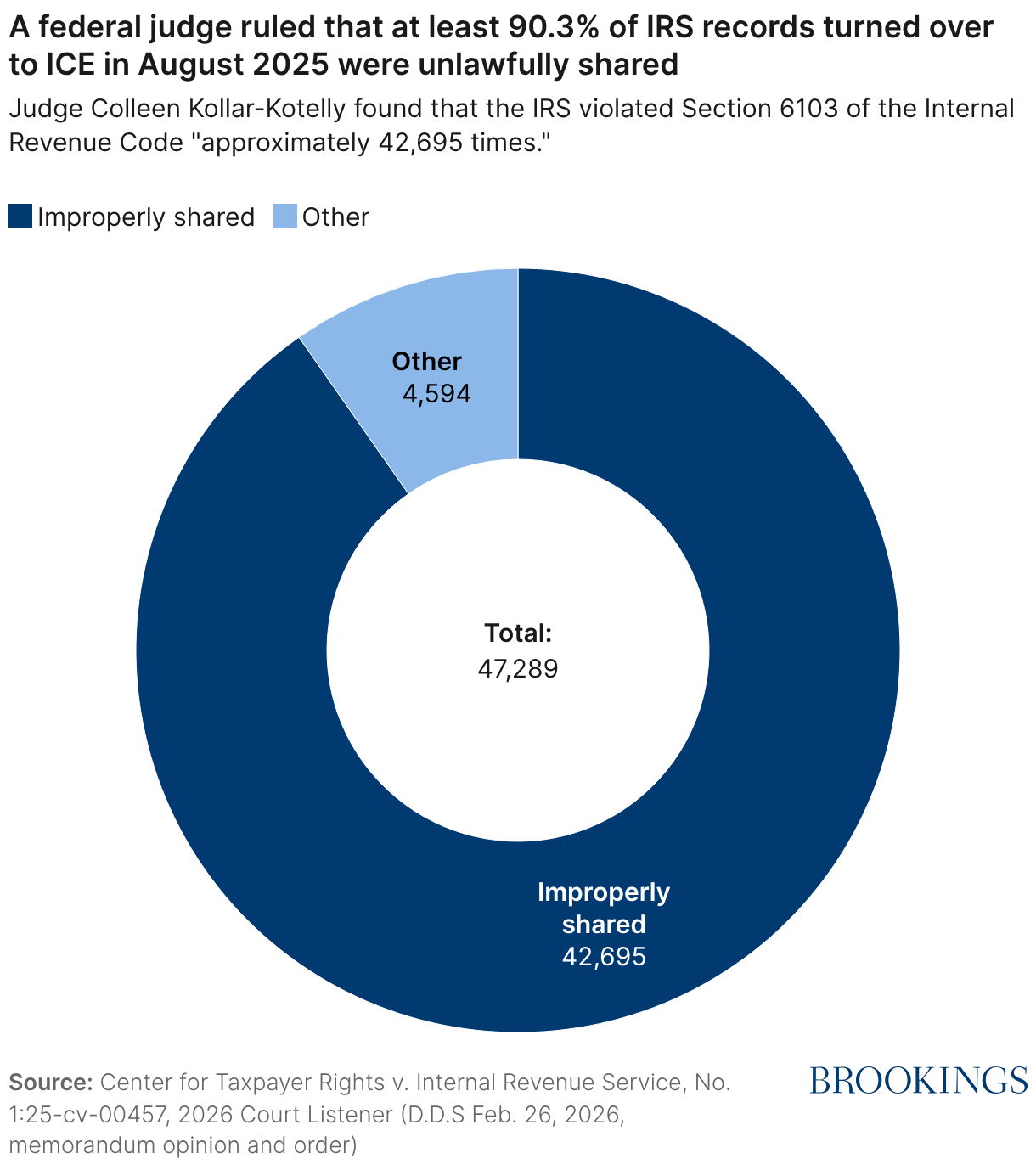
Having lost so much of its bulwark of principled leadership, the agency has also shed immense technical expertise, including nearly 2,500 IT staff and dozens of senior IT executives. So it is hardly surprising that, when the IRS eventually shared about 47,000 records with DHS, it failed to correctly implement the requirements outlined in the memorandum of understanding. As a result, nearly 43,000 of the records were shared in violation of the law, a federal judge ruled in February.
Data sharing between the IRS and ICE is currently enjoined by a federal court, but the administration continues to seek ways to use tax administration to target immigrants. The Treasury Department proposed a new rule that would exclude many currently eligible immigrants from accessing refundable tax credits, and issued a draft version of the primary individual income tax form, Form 1040, that includes for the first time a question about citizenship.
Violations of taxpayer privacy under section 6103 are serious crimes that can result in up to 5 years in prison, along with fines of up to $5,000. So can violations of section 7217, which prohibits White House officials from requesting the initiation or termination of tax audits. Nonetheless, a Trump administration official on two occasions requested a review of audits of a “high profile friend of the president.”
Trump has also repeatedly threatened to use tax enforcement to go after his perceived political opponents, including Harvard University and various nonprofit groups. In July 2026, Assistant Treasury Secretary and acting IRS Chief Counsel Kenneth Kies was pushed out after “he warned that the White House was at risk of violating a federal law prohibiting senior officials’ involvement in IRS audits,” the Wall Street Journal reports.
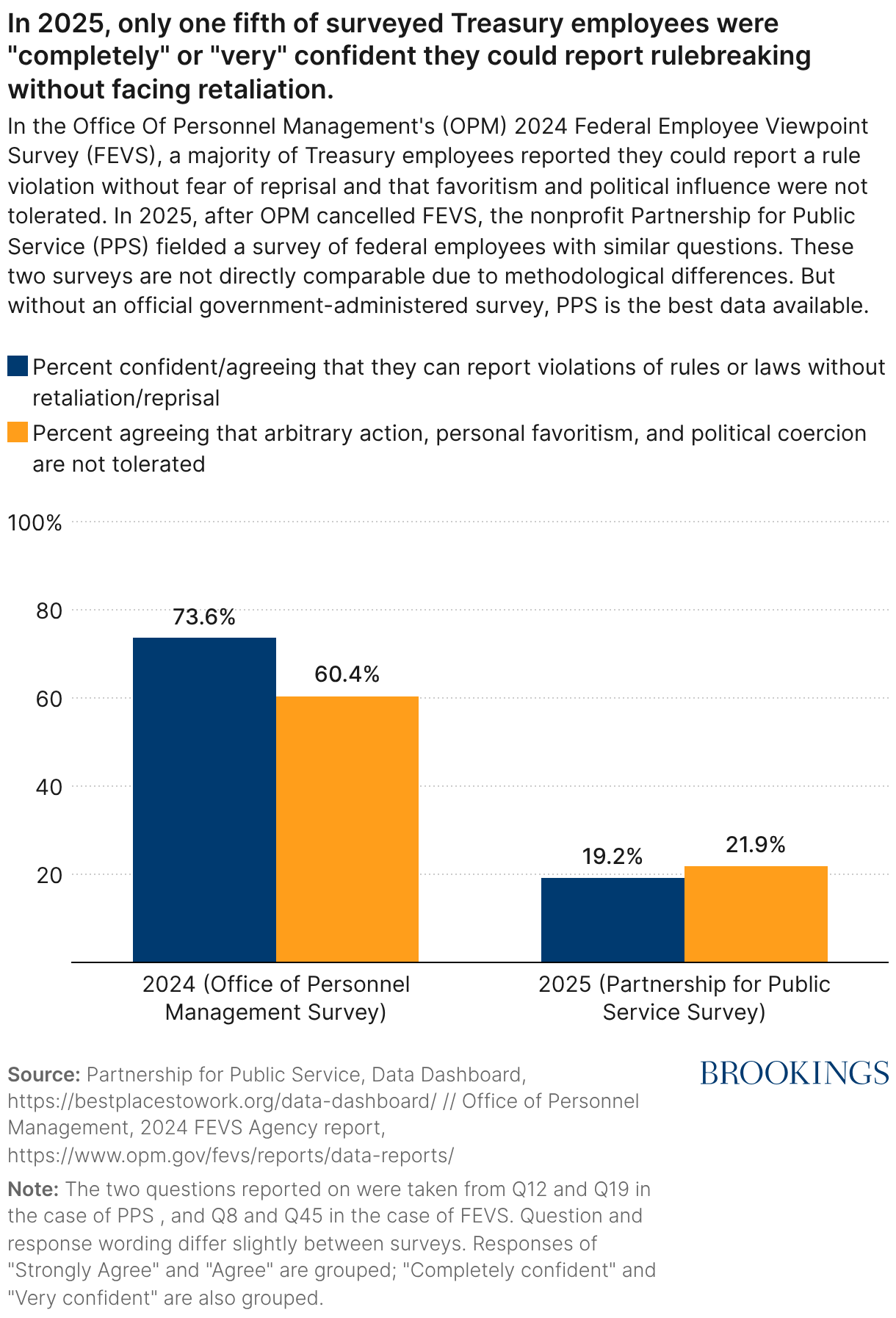
The rise of unethical behavior coincides with politicization and downsizing within the agency, creating a perfect storm where federal employees feel they cannot report wrongdoing without fear of punishment.
Perhaps the most egregious example of political interference is the announcement by the attorney general in 2026 that Trump, his family, and his businesses were immune from audits of their previous tax returns. As a lawsuit against the immunity order argues, presidential immunity would result in auditors receiving “unlawful directions to terminate particular taxpayers’ audits in violation of section 7217.”
It is hard to overstate the implications of the damage being done to our revenue service. The IRS raises $5 trillion a year to fund the federal government. But eroding taxpayer services makes taxpaying less convenient. Decreasing auditing capacity increases freeriding. Trampling privacy protections and weaponizing the tax administration endangers public trust.
It is plausible that, after the midterms, the new Congress will have a far greater appetite for exercising its constitutional authorities, including its oversight powers. A fuller accounting of the destruction of our revenue capacity is an essential first step toward rebuilding the IRS and the government as a whole.
More on IRS
Five Questions for IRS CEO Frank Bisignano
As the Internal Revenue Service gears up for tax season, there are reasons to worry. The agency has lost over three-fourths of its senior leadership and a quarter of its entire workforce. Traditionally helmed by a Senate-confirmed Commissioner for a five-year term, the IRS has been led by an


Taxes are the sinews of the state. - Cicero
Well done, Krasnov - Putin
I forwarded this post to an IRS agent I know and received this response: "This section: 'The agency issued paper check refunds in about six weeks, compared to about a week in previous filing season'
Is misleading, which makes me wonder if other sections I'm not educated on are also misleading.
The author makes it sound as if the additional five weeks is due to understaffing and incompetency. However, it is actually due to a change in tax law. The IRS is now prioritizing direct deposit. When we receive a return without direct deposit information, we now issue a CP 53E notice requesting [taxpayers] to access their irs.gov online account and provide banking info. If TP does not respond, we then mail a paper check after six weeks.
Due to this change in tax law, we actually greatly *decreased* the average time it took for most Americans to receive their refunds. It only slowed paper checks. But it simultaneously significantly reduced the number of filers requesting paper checks."
This agent is no apologist for the administration. They and their coworkers I've talked to continue to experience negative effects from Trump et al., including illegally dissolving their union.