Taft at the Beach
What the Supreme Court Misses About a Key Unitary Executive Precedent

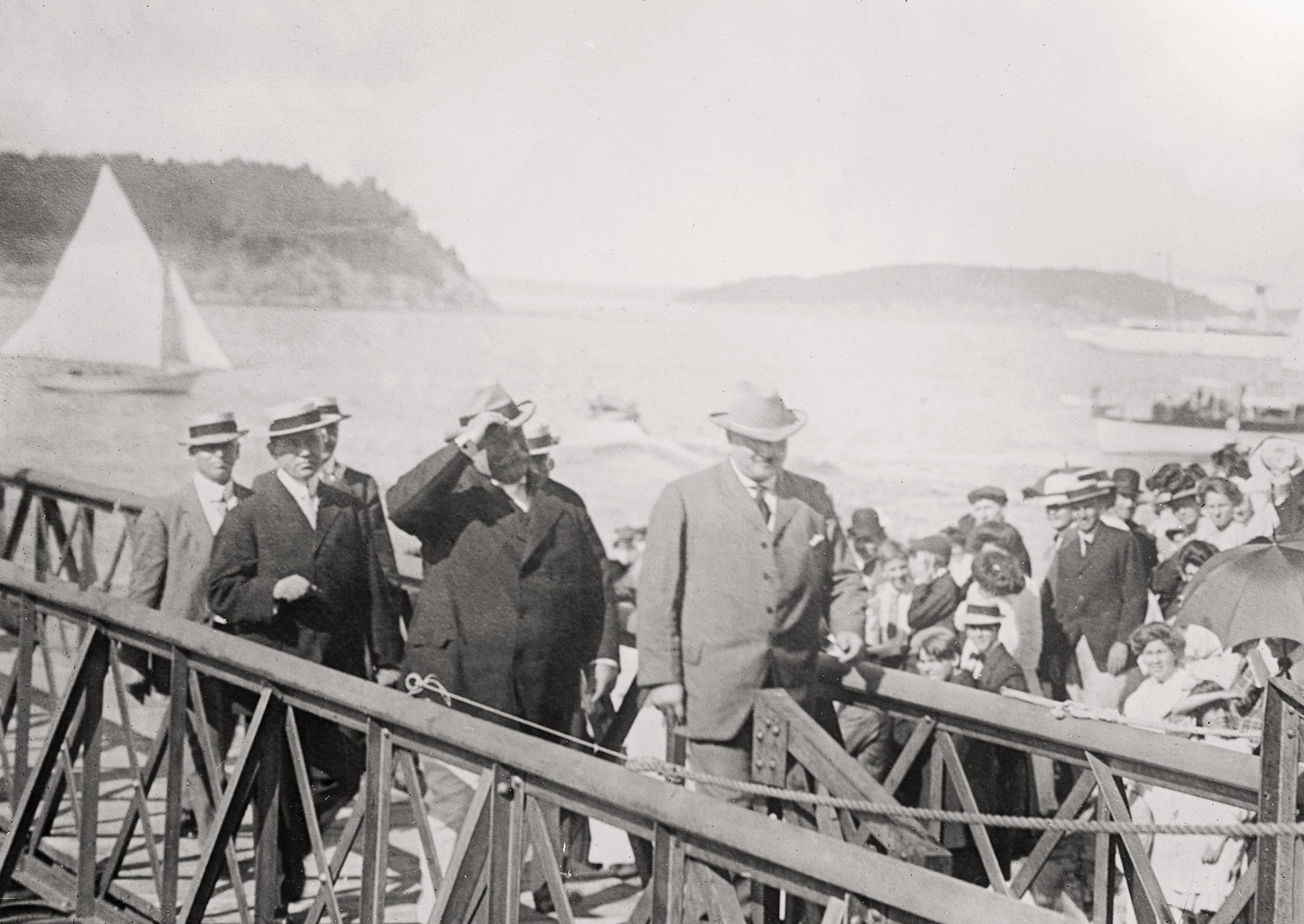
A lot of attention is being paid to William Howard Taft these days, a strange honor for one of the nation’s most mediocre presidents—so mediocre that, in fact, he once jokingly wrote to a friend, “I don’t remember that I was ever president.”
Unlike most mediocre presidents, though, Taft got to enjoy a second life as Chief Justice of the United States, from 1921 to 1930. This role suited him much better, and in it he proved, not just one of the most able stewards the Court has had, but also one of the most influential architects of the presidency in history.
Today, Taft’s influence can be seen in the Roberts Court, which cites his Myers v. U.S. decision in every separation-of-powers opinion it writes. It will undoubtedly soon cite Taft again when it hands down Trump v. Slaughter.
The decision is potentially one of the most important constitutional and administrative law cases in decades. Triggered by President Trump’s early 2025 firing spree that saw hundreds of thousands of government workers lose or leave their jobs, Slaughter will ask the Court to decide whether the FTC’s (Federal Trade Commission) statutory for-cause removal protections violate the separation of powers. At stake is how far the Supreme Court will go in removing job protections of federal employees at the behest of President Trump.
Can Congress protect officers from “the Damocles’ sword of removal” on grounds that their jobs entail sensitive or technical functions requiring insulation from politics? Or must the President possess “all of” the executive power in the name of democracy and good government?
Led by Chief Justice Roberts, a majority seems poised to answer the latter. This Term’s cases will tell us what exceptions to the removal power the judges will tolerate, and whether institutions like the National Labor Relations Board, Merit Systems Protection Board and the Federal Reserve survive in their current form. But there’s no doubt that the Court now sees presidential removal, with just a few tiny exceptions, as the law of our Constitution. And here, Myers is key.
The story of a conflict between a bedridden Woodrow Wilson and an obscure fourth-class postmaster in Portland, Oregon, the “epochal opinion” of Myers broke new ground by constitutionalizing a power (an “unrestricted” one, at that) that past presidents had only asserted in their enduring tug-of-war with Congress. Taft authored the Myers opinion, giving the President new powers to remove officials.
In Taft’s telling, the President’s job requires him to place “implicit faith” in “each member of his official family, and his chief executive subordinates,” and to be able, if ever “he loses confidence in the intelligence, ability, judgment or loyalty of any one of them … to remove him without delay.”
In the ensuing decades, Myers’ reach would be cabined by a series of cases protecting the New Deal state and upholding Congress’s authority to draw up the government as it wished. Yet, like the loaded gun at the start of a Chekhov play, Myers survived, ready to be picked up and fired when the moment was right. That moment has arrived.
The trouble is, Myers’ model of public administration is totally unrealistic (a government of two million officers is certainly nothing like a “family”). And it was not an accurate or complete vision of how President Taft thought about the relationship between the president and the agencies, either.
Shortly after losing the 1912 presidential election, Taft retired to Yale Law School to lick his wounds and take a break from public service. In that time, he produced a series of lectures, later published as Our Chief Magistrate and His Powers, that laid out his theory of the office, not to mention several complaints about its practical shortcomings.
One feature of office that weighed on Taft’s mind was the appointment process. At the time, the president was responsible for nominating some tens of thousands of offices for Senate confirmation.
Taft had a real problem with appointments: for one, they were a waste of the president’s time (“Why,” he complained, “should the President have his time taken up in a discussion over who shall be postmistress at the town of Devil’s Lake in North Dakota?”). Second, the process made officers into “the football of politics,” with legislators haggling over positions with which to reward supporters. Third, there was no way the president could comment knowledgeably on tens of thousands of candidacies. Finally, if each president set out to reinvent the government each time he took office, the “halt and lack of efficiency” would cripple the government.
Taft gave the example of the State Department, plagued by “entirely unnecessary helplessness” when “competent representatives abroad in our diplomatic service are removed and men of no experience replace them.” Both for time-saving and principled reasons, Taft concluded that the President should appoint no more than a few hundred officers (essentially, the Cabinet, assistant secretaries, judges, generals, admirals, and ambassadors). All others, he wrote, including bureau heads, should be reclassified by Congress as merit employees in the civil service so they could “have a permanent tenure and not change with each administration.”
In light of Myers, these thoughts on appointment are surprising. So, too, are his views on oversight and removal. In reality, President Taft was no hatchet man. He fired cautiously and always in compliance with statutes. Where a statute required “good cause” for removal, as for a customs board, Taft provided notice, held a hearing, and submitted evidence that the statutory predicates for removal had been met. Ironically, the statute Myers later invalidated for allowing the Senate to interfere with removals, the Tenure of Office Act of 1876, was one Taft scrupulously adhered to as president, yielding on proposed removals where the Senate refused to back them.
As it turns out, Taft did not actually run his government as a top-down, command-and-control operation where he served as CEO. More to the point he disliked the aspects of unitary executive as the Trump administration has pursued them and which the Roberts Court relies on Myers to enable: a highly politicized administration that weakens the civil service, firing employees without any demonstration of cause.
Chiefly, this was because he believed such a model was pointless: it was impossible, given government’s complexity, for the president to try to “impose his personality minutely” on its “permanent structure.” More vividly, he wrote,
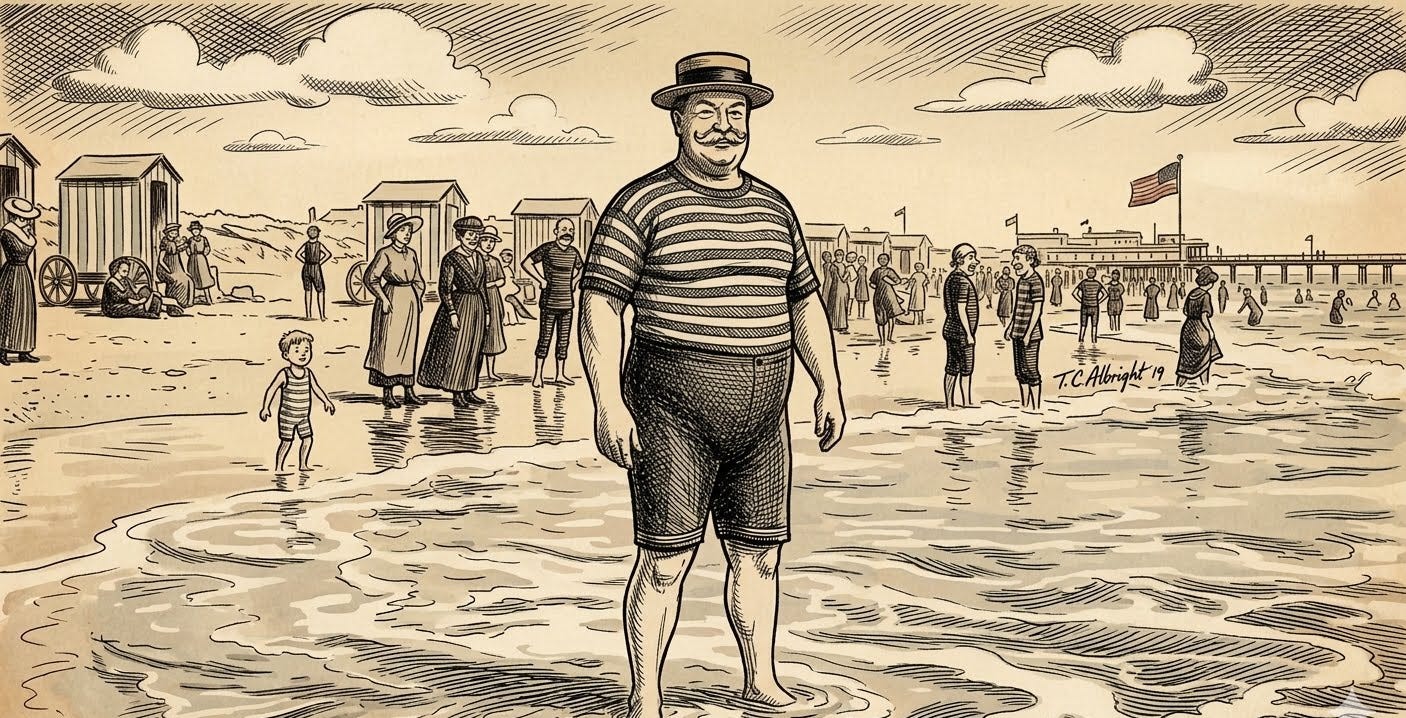
Presidents may go to the seashore or to the mountains, but the machinery at Washington continues to operate under [an] army of faithful non-commissioned officers, and the great mass of governmental business is uninterrupted.
And this was a good thing! After all, Taft explained, civil servants had “far greater experience” than political appointees, not to mention a “life-long fidelity and efficiency [to their missions] . . . . not rewarded by notices in headlines.” In other words, the president could and should trust experts to do their jobs. He should be able to depart to the beach knowing that government would trundle along under safe hands.
Thus, despite the contemporary unitary mythos of “a single head [of government who is] the focus of public hopes and expectations,” Taft transparently understood the Executive Branch as a “they,” not an “it.” His vision of presidential administration was not unilateral or command-based, but consensual and cooperative: the President might go to the seashore for weeks, or even months, at a time, but he—and the nation—could rest comfortably in the knowledge that, thanks to the honesty and competence of the lower echelons of the civil service, government would go on.
These days, the presidency is in a rough state. Trump’s deep depredations into the civil service cast an ironic pall on Taft’s efforts to reconcile an “unrestricted” removal power with “efficient government,” while for close to two decades now, the Roberts Court has enabled a one-man presidency, and with Slaughter and like cases, they may go further. Has the Roberts Court self-interestedly misinterpreted the former chief justice’s handiwork? Or did Taft himself lack a “coherent mind”? Whatever the truth, there’s no doubt that Chief Justice Taft’s presidency has proved more lasting than President Taft’s ever was.
A question remains, though. Should we run our government by Taft’s theory, or by the government Taft actually ran?
Andrea Scoseria Katz is an Associate Professor of Law at Washington University School of Law in St. Louis. Professor Katz teaches and writes about constitutional law, with a focus on presidential power.
 | A guest post by
|