Estonian E-Government
Or How I Learned To Stop Worrying And Love The State (Capacity)
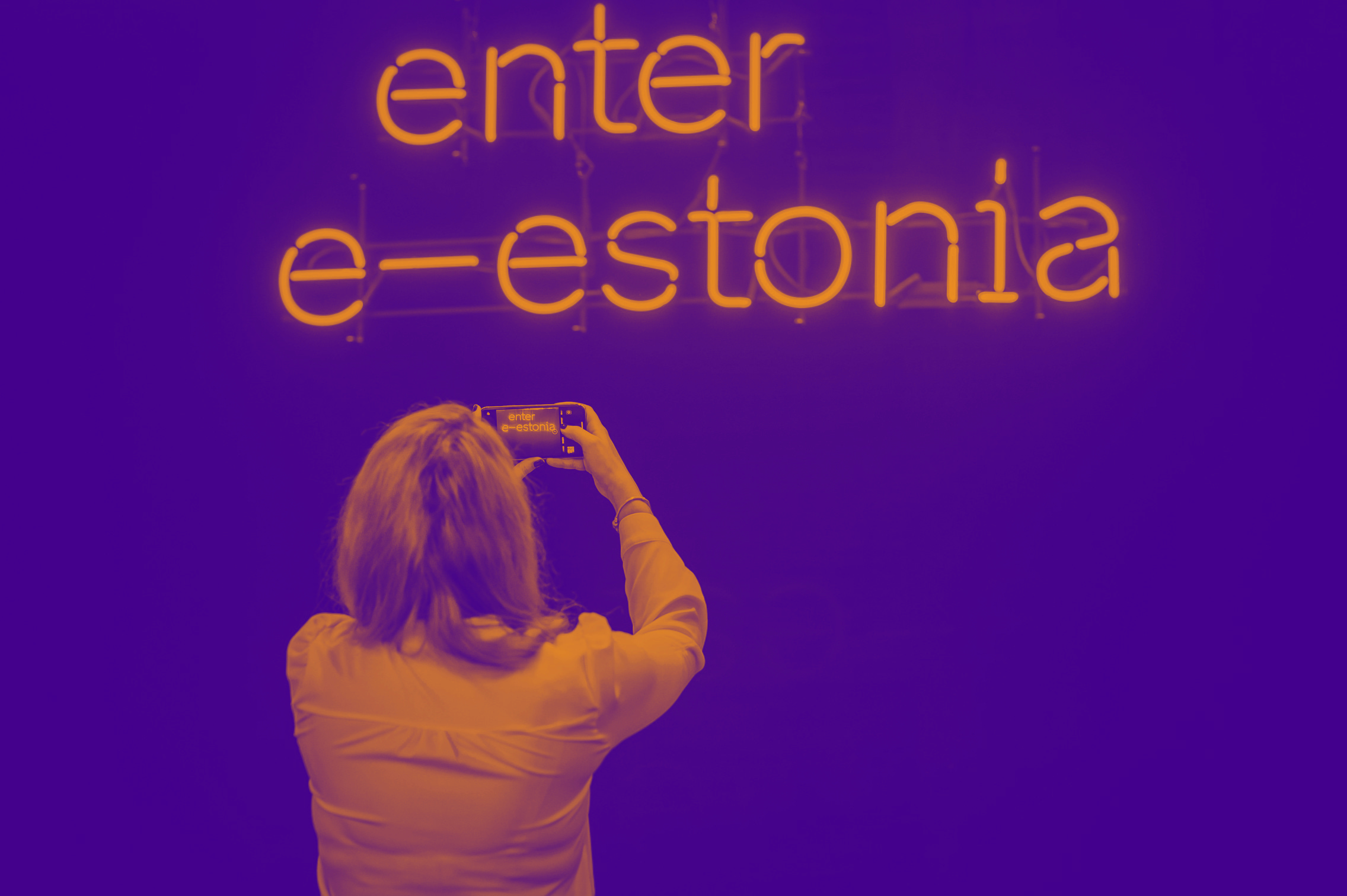
If there is one thing I learned during my time working in Estonia’s government and advising members of Congress here in America, it’s this: Culture eats policy, and software is eating government. Both of these claims have been made abundantly clear by DOGE as many of the things that folks inside and outside the government thought were constraining legal rules turned out instead to be cultural norms and as controlling key aspects of the software stack clearly offers inordinate amounts of leverage over government systems.
But this post isn’t about DOGE (for that, I recommend Santi Ruiz’s 50 Thoughts on DOGE), it’s about how the nation of Estonia has taken a very different approach to building public services than America. The Estonian approach is one that is focused on saving consumers time and money by treating citizens like customers and one which places trust in citizens.
Estonia has long billed itself as a digital nation with a robust e-government that has digitalized all government services and helped to save significant amounts of time and money (the government has claimed about 2% of annual GDP), and its exploits have been widely reported in publications like Wired and The New Yorker.
However, it’s important to understand why Estonia went all in on e-government. It wasn’t just about trying to find ways to scale services in a cost-effective manner post re-independence from the Soviet Union or to make the process of getting divorced less awkward by digitalizing it, it was about reimagining the way citizens could interact with the state in a digital world and creating a better model.
From the very beginning, the country made deliberate choices to rewire not only what the government does, but how it thinks about its responsibilities. That meant the government treated citizens as customers (instead of one of many stakeholders). It meant they focused on outcomes instead of procedures and process. And it meant saying, sometimes audaciously, that the state can and must do better and evolve.
This wasn’t just talk. Estonia designed a digital identity system that underpins all its services—from voting online to near-automated and free tax filing. When it did, it made hard and sometimes unpopular choices that had real political costs, like making digital identity mandatory at a time when few understood its potential value, or investing in connecting every school to the web at a time when budgets were scarce. But instead of thinking about short-term political wins, the country worked to architect a system that would last and create a foundation that could continue to be built off of to support more and more citizen services – enabling the environment Estonians enjoy today where citizens can use their digital identity cards to log into bank accounts, view their electronic health record, or even use them as loyalty cards at local shops.
They also architected a system that helped to safeguard individual privacy. Today, Estonians can easily see via an online portal whether anyone had accessed their data, like a police officer pulling up their driving record during a traffic stop, and created a legal framework that enables citizens to demand official answers as to why their data was accessed. This isn’t to say the system is perfect and there have been reported privacy violations, but the perpetrators were brought to justice thanks to a strong adherence to the rule of law in the country.
The result? Estonia now delivers services that citizens trust and often barely notice—because they just work. One of the best examples: having a child. When she goes to the hospital, the mother’s digital identity is linked to her electronic health record. The doctor can see if there may be any pre-existing conditions to be aware of and when the baby is born, that new little person is tagged to the parents’ profiles. Because the government already knows who the parents are and what they’re eligible for (such as tax benefits or social programs), the state can proactively send them money and access to the resources they need. No application processes to be discovered and completed. Plus, the automation of parts of the process have major time and cost-saving benefits for the government as well, with more than an estimated hour saved in application processing time for each birth.
Compare that to the American system where new parents face significant burdens and paperwork. In the Washington Post, Alyssa Rosenberg wrote about how American parents are drowning in paperwork, “There are many parts of parenting for which it’s impossible to prepare, be it the first late-night trip to urgent care with a miserable, feverish toddler or a big question about sex or death asked at an inopportune moment. But perhaps the most mundanely irritating of these surprises is the vast amount of paperwork that follows children, like Pigpen’s unrelenting cloud of dust.
At minimum, this secretarial work levies a time and emotional tax on parents. At worst, paperwork can become an obstacle to getting financial help, medical insurance, aid for college or even an elementary school education.” What American parents face is indicative of a larger attitude towards how the state frequently approaches delivering any form of services, where there are onerous means testing requirements and hoops to jump through that inconvenience everyone but may help prevent potential fraud.
In Estonia, services are created in a way that builds up systems that work for people. Instead of using inefficient and byzantine processes as a way to do means testing or because of how some seemingly innocuous legal requirement within a government agency has been interpreted and re-interpreted, Estonia has shown that we can build tech up to provide better and often proactive and automated public services instead of using tech to tear them down. Not only has Estonia demonstrated that this is possible, they’ve shown that it can save time and money.
For example, it has largely eliminated arduous tax filing every year by automating the process even as a 2024 report by the Tax Foundation estimated that American “Taxpayers will spend a total of over 7.9 billion hours on tax filing and compliance related activities this year.” And while some may be concerned about potential privacy violations, consider whether you would rather have a system where every time a government employee accesses your data it is visible to you and you can demand answers as to why, or the current status quo in America where we generally have little idea as to what personal data the government has, let alone who accessed it.
This is the real takeaway: Estonia didn’t build e-government systems because it wanted to be more efficient (though it is). It built a digital-first government because it’s the best way to deliver public services that work for people. Proactive digital services mean people don’t miss out on benefits they’re eligible for. They used AI for everything from transcribing parliamentary sessions to traffic management to make the government more democratic and efficient, not because it was the latest trend (Estonia’s use of AI in government operations far predates ChatGPT).
Transparency in data access means people trust their institutions more. And minimizing paperwork—especially for vulnerable groups like new parents—means more people can participate in society without being buried in forms, lines, and delays, forced to pay an unnecessary time tax.
This is not about shrinking the state. It’s about making the state actually work for people in a way that is efficient and practical. America has an opportunity to learn from Estonia – it means making hard and sometimes unpopular choices, like giving civil servants more autonomy, cutting into the bottom lines of powerful interest groups and government contractors, and ruthlessly prioritizing what the government invests its limited resources into. But we can and must build a state that delivers services and delivers them well. To do so we should create a bureaucratic culture like that in the Estonian government, one that treats citizens as customers and places trust in the American people and civil servants.
Joel Burke is the author of Rebooting a Nation: The Incredible Rise ofEstonia, E-Government and the Startup Revolution and a research fellow at fp21. Joel has served as an AI fellow in the office of Senator Mike Rounds and a TechCongress Innovation Fellow in the House of Representatives as well as the Head of Business Development for the Republic of Estonia’s e-Residency program.
How fascinating and I do believe that we need to implement more digital access for public services. I do worry about privacy. What happens if someone else accesses your digital ID; they can access everything about you. How do they deal with ID theft? But, I do believe that we should use digital resources so people don't have to provide information that the government already has access to, and don't have to provide this information so frequently. We also need to provide funding to upgrade government computer systems instead of dealing with Republicans allowing our data to be given to Musk and trying to privatize everything. Trump et al are killing the IRS Direct File program because TurboTax and other software e-filers don't like it. As long as Republicans control Congress we can't have nice things.
To view us as a ‘customer’ would be refreshing! I would worry though about hacks to a centralized system.